


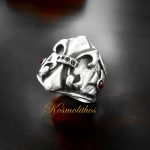
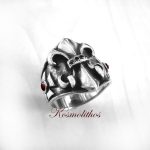
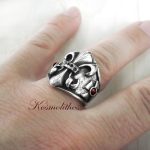

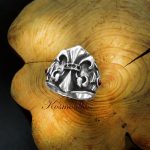
Fleur De Lis Ring
€225.00
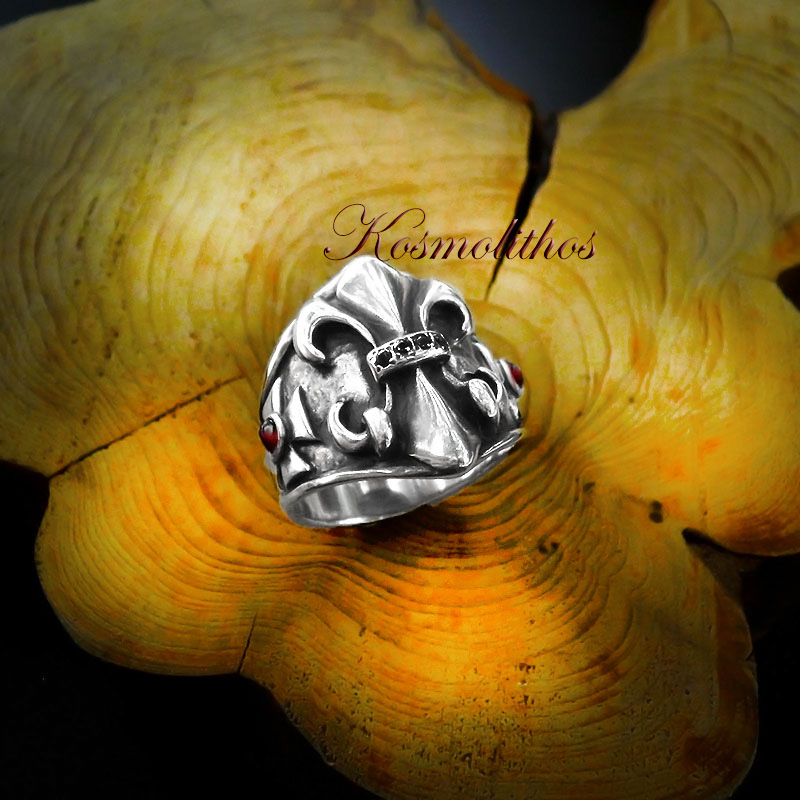
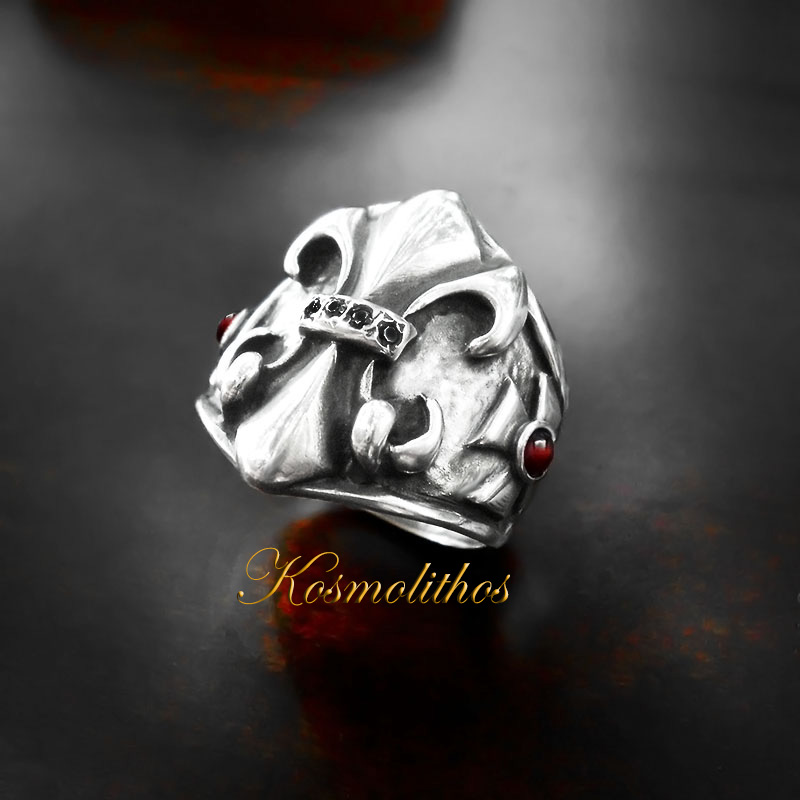
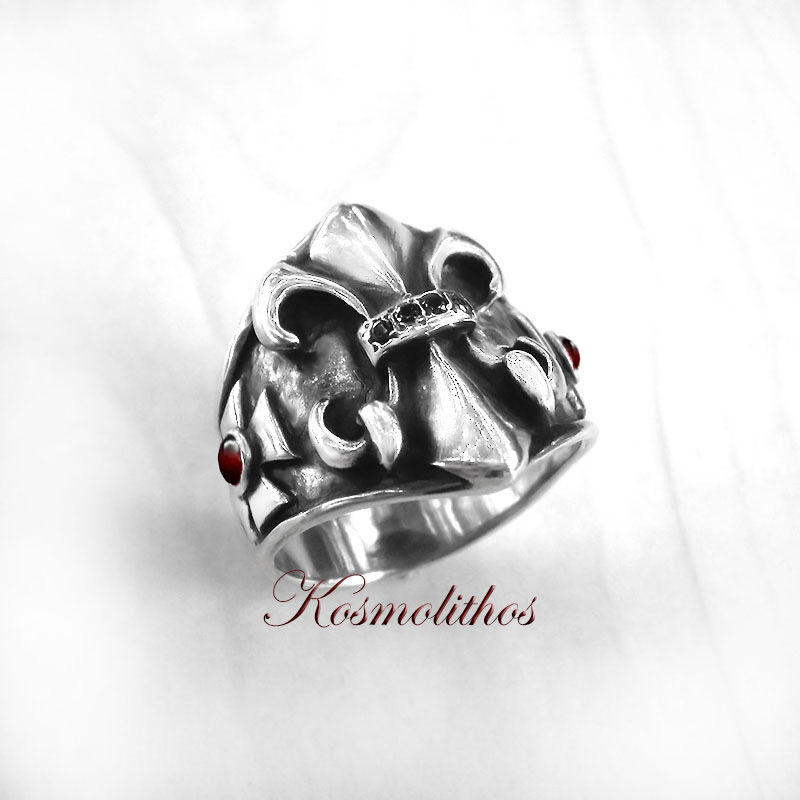
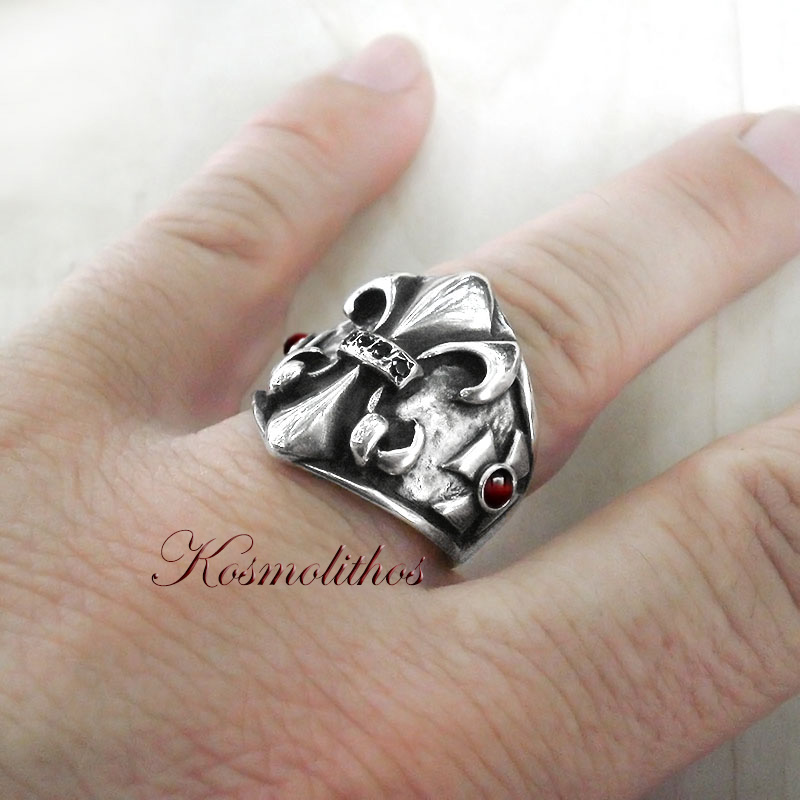
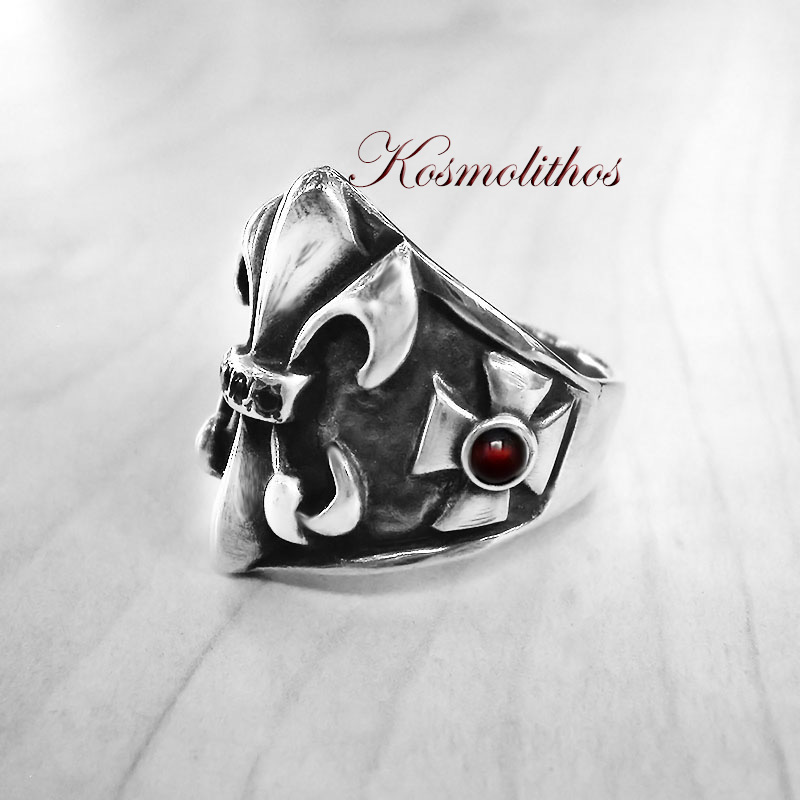
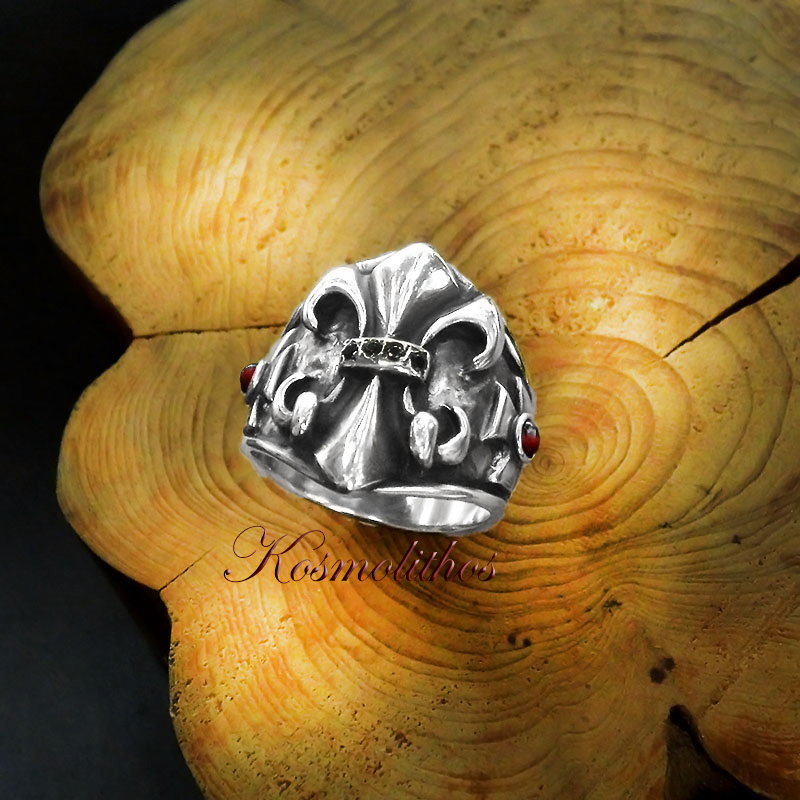
A beautiful handmade Fleur De Lis ring made of solid 925 silver, with two beautiful natural Granada gemstones on each side.
(If you don’t know the metric system we have for your ring size, message us your country’s ring size, and we will make it as you want, no matter what size you choose from the size box)
A beautiful handmade Fleur De Lis ring in solid 925 silver, with two beautiful natural Granada gemstones on each side.
This ring is inspired by the medieval era where the Knights Templar, wearing distinctive white cloaks with a red cross, were among the most skilled fighting units of the Crusades.
About Fleur de Lis
The Fleur-de-lis (French: “lily flower”), also spelled fleur-de-lys, is also called flower-de-luce, a stylized emblem or device widely used in decoration and, especially, in heraldry, and has long been associated with the French crown.
One legend identifies it as the lily given at his baptism to Clovis, king of the Franks (466–511), by the Virgin Mary.
The lily is said to have sprung from the tears shed by Eve as she left Eden.
Since ancient times it has been the symbol of purity and was readily adopted by the Roman Catholic Church to connect the holiness of Mary with events of special significance.
Thus, when Pope Leo III crowned Charlemagne emperor in 800, he is reported to have presented him with a blue banner covered (semé) with gold fleurs-de-lis.
That the French kings had long used the fleur-de-lis as an emblem of their sovereignty is indisputable. On his seal of 1060, before the formalization of heraldry, Philip I is shown seated on his throne holding a short staff ending in a fleur-de-lis.
A similar staff appears on the Great Seal of Louis VII (1120–1180), whose signet ring was charged with a single fleur-de-lis.
It is believed that Louis VII was the first to use the azure semé of fleurs-de-lis or (the coat of arms, or heraldic description, now abbreviated as azure semé-de-lis or also called France Ancient) on his shield, but its use on a banner, and particularly on the French royal banner, the Oriflamme, may have been earlier.
The reduction to three fleurs-de-lis, now called France Moderne, was ordered by Charles V in 1376, reportedly in honour of the Holy Trinity.
The classic shape of the fleur-de-lis, and the shape adopted by most artists today, is shown in the image. Between the classical period and the modern period, its design was modified by the constraints and tastes of the craftsmen and their patrons, so that during those centuries now called the heraldic “Decline”, the outlines could be grotesque.
During this period there were also attempts to distinguish between minor variations, so that commentators wrote of fleur-de-lis au pied coupé or au pied nourri, in which the feet are absent or replaced by a trapezoidal pedestal.
Such variations were introduced at the whim of the artist and have no heraldic significance.
The one variation recognized is the fleur-de-lis remplie, in which the three petals are separated by two stamens, as in the coat of arms of the city of Florence.
Some modern artists give the fleur-de-lis an apparent three-dimensional effect, but this is a matter of license and is ignored in the coat of arms. If a lily is depicted naturalistically in heraldry, it is called a lis-de-jardin (“garden lily”) to distinguish it from the stylized fleur-de-lis.
| RING SIZE | 50, 51, 52, 53, 54, 55, 56, 57, 58, 59, 60, 61, 62, 63, 64, 65, 66, 67, 68, 69, 70, 71, 72, 73, 74, 75, 76, 77, 78, 79, 80 |
|---|